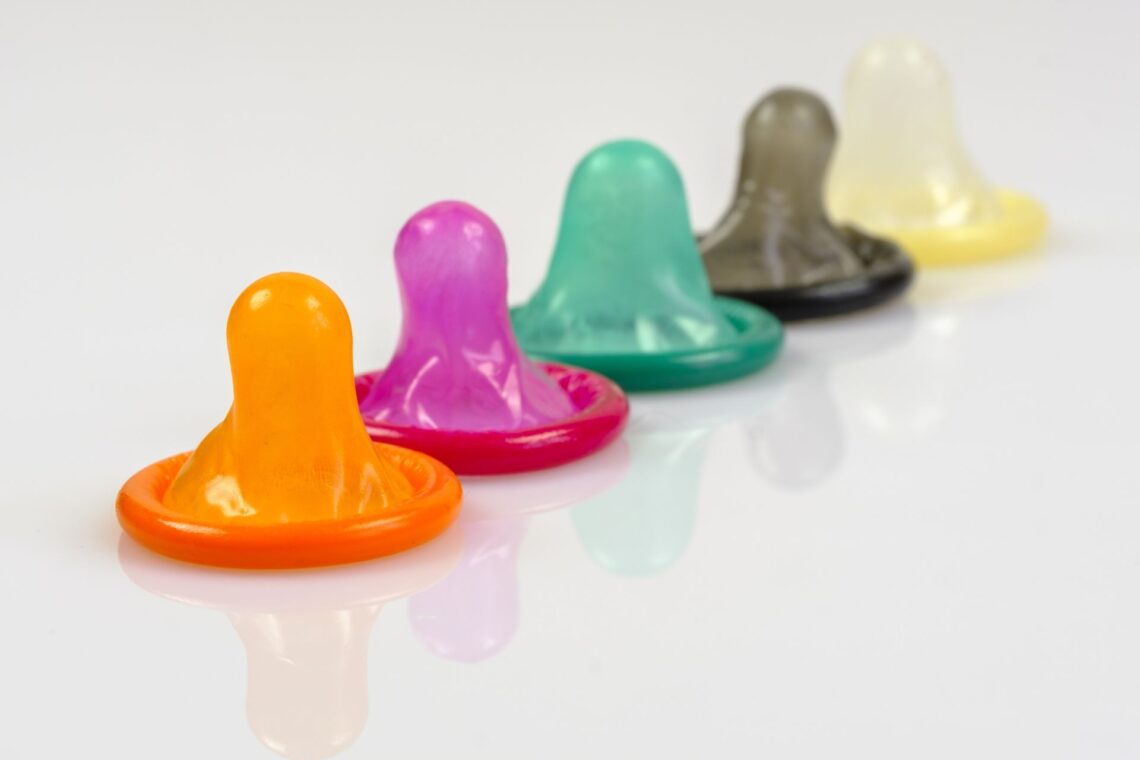
The best barrier for oral sex depends on the type of sex you’ll engage into. Use a condom for oral on a penis, and use a dental dam or cut-open condom for oral on a vulva or anus.
Latex and polyurethane offer the strongest protection, and using a barrier every time you have oral sex cuts the spread of fluid-borne STIs like gonorrhea, chlamydia and syphilis by a large margin.
Why Oral Sex Needs Protection
A lot of people think oral sex is low risk because school sex ed rarely talks about oral transmission. The truth is that oral sex can spread gonorrhea, chlamydia, syphilis, herpes, HPV and even HIV in rare cases.
If fluids touch your mouth, there’s a transmission route. Once you understand that, adding a barrier feels less awkward and more like a basic safety step.
What Is the Best Barrier for Oral Sex?
The right barrier depends on the type of oral sex you’re having.
Oral on a penis
A latex condom gives the strongest protection. It blocks fluids almost completely, which is exactly what matters. Flavored condoms work well if taste is a priority. Polyurethane and polyisoprene are good alternatives for people with latex allergies.
A useful comparison comes from sex-worker health programs. When condom use during oral sex jumped from about 42 percent to roughly 90 percent, throat gonorrhea rates dropped sharply according to this pubmed analysis.
If switching techniques is part of the fun for you, a condom won’t hold you back. You can still explore things like different blowjob positions to keep the session engaging.
Oral on a vulva or anus
Dental dams are designed for this. They’re thin sheets of latex or polyurethane that sit between your mouth and the genitals or anus. They block fluids just like condoms do.
The main issue is availability. Dental dams aren’t stocked everywhere and most people have never used one. Once you learn how to lay it flat and use a little water-based or silicone lube underneath, the process becomes quick.
If you don’t have a premade dam, cutting open a condom is the easiest workaround. Unroll it, cut off the tip and base, then slice it open so it becomes a flat sheet.
Sometimes people suggest cling film as a last-minute barrier. It can work if it’s non-porous, but it tears easily and isn’t designed for STI protection. A latex sheet is the safer choice.
If you enjoy exploring different oral techniques, you can layer a dam into things like the Kivin method for oral sex without losing control or rhythm.
Oral Sex STD Probability
Oral sex is generally safer than vaginal or anal sex, but “safer” doesn’t mean risk-free.
Here’s a quick breakdown of estimated likelihood based on clinical data and how STIs behave:
- Gonorrhea: High probability through oral sex, especially throat infections.
- Chlamydia: Medium probability. Less efficient than gonorrhea, but it still infects the throat and anus.
- Syphilis: Medium to high probability if a sore is present, since even brief contact can transmit it.
- Herpes (HSV-1 and HSV-2): High probability since it spreads through direct skin-to-skin contact.
- HPV: Medium probability. It can infect areas not fully covered by a barrier.
- HIV: Low probability, but not zero. Risk increases if there are sores, bleeding gums or high viral load.
Using barriers lowers the probability dramatically because you’re blocking the main route of transmission: direct contact with fluids. Regular testing and visual checks help, but barriers remain the strongest day-to-day defense.
If you want to reset what you think is risky or not, reading through common blowjob myths helps clarify how transmission actually works.
How Well Do Barriers Actually Work?
Condoms have been studied for decades. When used correctly, they reduce the transmission of fluid-borne STIs by large percentages. HIV transmission, for example, drops by about 71 to 80 percent in heterosexual couples. Reductions for gonorrhea, chlamydia and hepatitis B follow a similar trend.
Dental dams don’t have the same volume of research, but clinicians use the same logic. If the barrier blocks fluids, it blocks the main transmission pathway. The biology doesn’t change just because the material is flat instead of tubular.
Barriers don’t fully stop skin-to-skin infections like HPV or herpes, since those can be on exposed areas nearby. Protection still improves significantly, but nothing is perfect.
What About Antimicrobial Gels or Microbicides?
Research into antiviral gels is ongoing. One example, VivaGel, showed about 90 to 96 percent antiviral activity in lab settings. These results are promising, but nothing in this category is approved for oral STI prevention. Real-world testing is limited, and irritation is still a concern.
For now, microbicidal gels are ideas, not reliable tools.
Comfort, Taste and Real-Life Use
The most common barrier complaint is taste, which is why flavored condoms and flavored dental dams exist. They’re made specifically for oral sex and help a lot more than people expect.
Avoid oil-based products with latex since they weaken the material. Stick to water-based or silicone lube. If a dam slips, stop and reset with a new one. Barriers are single-use products.
If you want to keep pleasure high while staying protected, learning how to edge a guy during oral can turn safety into part of the fun rather than a distraction.
Final Thoughts
The best barrier for oral sex is the one that fits the act and stays in place. Condoms for penises and dental dams for vulvas or anuses keep things simple and effective. They dramatically lower oral sex STD probability by blocking fluids and reducing exposure.

