
When you hear the term safe sex, what comes to mind? Most people think about preventing pregnancy or avoiding STIs. But beyond biology, safe sex is also about feeling secure, respected, and in control. One way to remember how to approach safe sex is with the “4 Cs”: Consent, Communication, Condoms, and Contraception.
These pillars cover physical safety and emotional well-being, making sexual experiences healthier and more enjoyable.
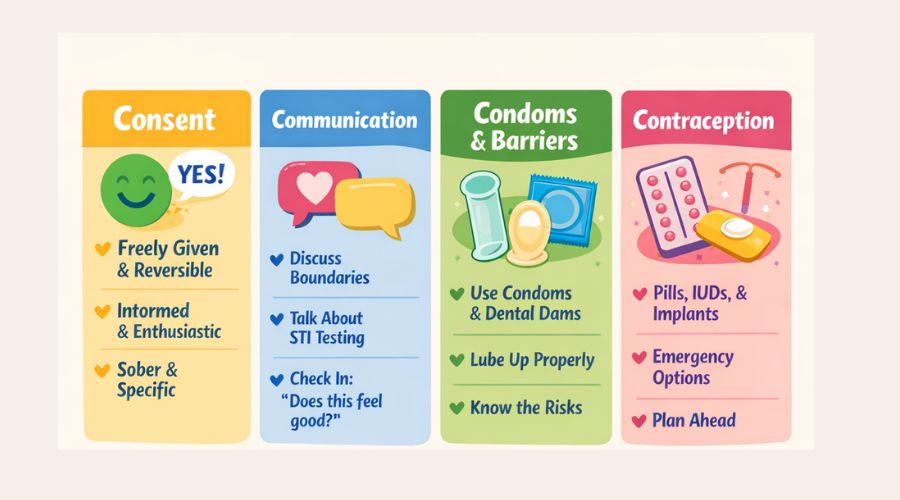
1. Consent
Consent is non-negotiable. Without it, nothing else matters. It is not just about hearing “no”. It is about having a clear, enthusiastic “yes” from everyone involved.
Think of consent as FRIES: Freely given, Reversible, Informed, Enthusiastic, and Specific. This means you can say yes now and change your mind later, and your partner can do the same. It also means being sober enough to understand what you are agreeing to. Drugs or alcohol can make consent invalid.
Practical tip: Before any sexual activity, confirm what is okay and what is off-limits. A quick “Are you comfortable with this?” can prevent a lot of awkward or unsafe situations. Consent is not just a formality. It sets the tone for mutual respect and trust.
2. Communication
Even with consent, misunderstandings happen if partners do not talk. Communication is the bridge between desire and comfort. Discuss boundaries, fantasies, and health status ahead of time.
- Check-ins: During sex, simple questions like “Does this feel good?” or noticing non-verbal cues can make a huge difference.
- Health transparency: Talk about STI testing and the last time you were screened. It is better to be awkward once than regretful forever.
- Boundary clarity: Set “hard nos” and “maybes” before getting intimate to avoid confusion or discomfort.
Clear communication is not just practical. It is also a form of care and respect. Knowing your partner’s limits and preferences builds confidence and intimacy.
3. Condoms (and Barriers)
Condoms are the classic barrier method, but think of them as your toolkit for safer sex. They prevent skin-to-skin contact and the exchange of bodily fluids, cutting the risk of most STIs dramatically.
- Variety matters: Male condoms, female condoms, and dental dams all have roles. Each protects differently, so choose the one that fits your situation. For oral sex, you can read more about the best barriers for oral sex.
- Proper use: Water-based or silicone lubricants reduce friction and prevent tears.
- STI protection: Condoms are the only method that guards against both pregnancy and many STIs. Common misconceptions about oral sex can lead to unnecessary risk, so check out our guide on blowjob myths to stay informed.
Even if you use condoms consistently, regular STI testing is still important. No method is perfect. Think of condoms as a layer, not a guarantee.
4. Contraception
If there is a chance of pregnancy, contraception is your backup. Many people use dual protection: a condom plus another method, like the pill, IUD, or implant.
- Hormonal options: Pills, implants, or injections prevent ovulation.
- Long-term devices: IUDs provide years of reliable protection.
- Emergency planning: Know about emergency contraception in case primary methods fail.
Contraception is not just about prevention. It is about control. You get to decide when and if pregnancy happens, which makes sexual experiences less stressful and more empowering.
Quick-Apply Checklist: The 4 Cs in Real Life
- Consent: Did you get a clear yes? Are you checking in?
- Communication: Have you discussed boundaries, STI status, and preferences?
- Condoms/Barriers: Are they available and properly used?
- Contraception: Is your backup method in place if pregnancy is possible?
By following the 4 Cs: consent, communication, condoms, and contraception, you protect your body, respect your partner, and make intimacy more satisfying. Start with these steps, and you will feel safer, more confident, and fully in charge of your sexual health.